



Description
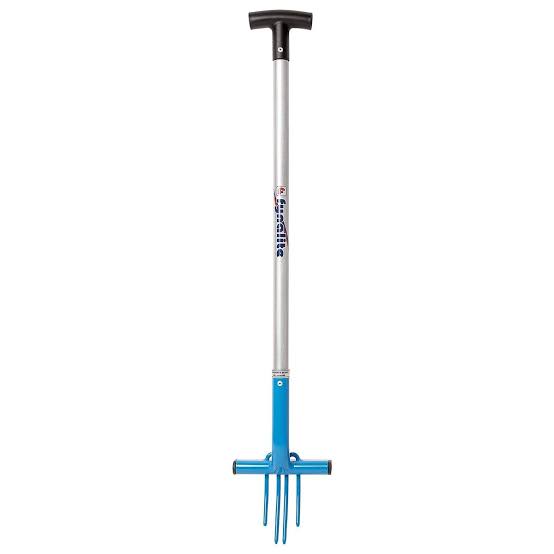
The Fyna‑Lite Multi‑Weeda is expertly designed to make light work of tough, deep-rooted weeds such as ragwort, thistles, dandelions, docks, and nettles. Its strong, sharpened prongs easily penetrate compact or stony soils, lifting weeds cleanly and entirely from the root. This allows for effective removal without disturbing surrounding soil or relying on chemicals—perfect for eco-conscious gardeners, farmers, and equestrians.
User‑Focused Design
Featuring a durable yet lightweight aluminium shaft and a comfortable T‑grip handle, the Multi‑Weeda is built for long sessions in the field. Its ergonomic construction reduces hand fatigue and enhances control, making it ideal for paddock maintenance, pasture management, and garden use. Available in a variety of colours for personal or team identification.
Perfect for Field & Garden Use
Whether you’re maintaining paddocks, tackling weed infestations in the garden, or managing a smallholding, the Multi‑Weeda provides reliable, chemical-free weed control. Trusted by farmers, yard owners, and equestrians alike, it combines precision with durability for lasting performance.
Ragwort Removal: Why It Matters & How the Multi-Weeda Helps
Ragwort (Senecio jacobaea) is a toxic, invasive plant commonly found in pastures, meadows, and along road verges. It poses a serious threat to livestock—particularly horses and cattle—due to the presence of pyrrolizidine alkaloids, which cause irreversible liver damage even in small amounts. Once dried in hay or silage, ragwort becomes more palatable but remains just as toxic, making early and thorough removal vital.
Effective ragwort control involves targeting the plant at the rosette or early flowering stage—before it produces seeds. The Fyna-Lite Multi-Weeda is specially designed for this task, with sharp prongs that penetrate deeply to extract the full taproot. This minimises the chance of regrowth, which often occurs when only the top of the plant is removed. Its design ensures minimal soil disturbance while enabling full-root extraction, even in compacted or stony ground.
The T‑grip handle provides superior leverage and control, making it easier to twist and lift the plant without breaking the root. For best results, ragwort should be removed during dry conditions and disposed of responsibly by burning or bagging, as it remains poisonous after wilting. Regular checks and early intervention are key to managing spread and maintaining a ragwort-free environment.