



Description
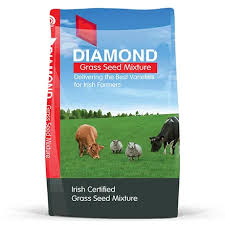
Diamond Horse Paddock Mix is a general purpose, palatable, permanent horse paddock mix that requires low inputs of nitrogen and will also provide a crop of hay. Robust varieties allow intense grazing with excellent repair and anti-poaching properties. This dense mix will provide a year round cushion for horses to exercise and/or graze.
Included in the Diamond Horse Paddock Mix
| OAKPARK | 4.00 KG |
| MOIRA | 4.00 KG |
| TIMOTHY | 1.50 KG |
| STRONG CREEPING RED FESCUE | 2.00 KG |
| SMOOTH STALKED MEADOWGRASS | 1.50 KG |
| 13.00 KG |
Oakpark
High PPI late diploid, high performing spring growth, bred at Teagasc Oakpark for Irish farmers, good digestibility, excellent sward density.
Moira
Moira is an intermediate diploid perennial ryegrass. The Moira provides excellent spring growth.
Timothy
Grows well in wet and peaty soils and has superior winter hardness.
Strong Creeping Red Fescue
Often known as Strong Red Fescue, this common grass, as its name implies, has creeping rhizomes. It has a more vigorous creeping habit than some similar species which can help to create a dense, hardwearing turf or sward. These shallow creeping roots help it to remain green even in drier soils.
Smooth Stalked Meadowgrass (Poa pratensis)
One of the greenest grasses found growing in the early spring. Palatable, and nutritional to livestock, often called one of the traditional 'sweet grasses'. Used for grazing and as a bottom grass component of a traditional sward. A long term persistent perennial species. This is one of the most nutritious meadow grasses, with early spring growth and persisting on thinner, dry land. Good frost tolerance.
Ideal Sowing Time: Sow from May to June
Flowers: May - August
Management: Generally, it can tolerate moderate to heavy grazing
Height: Varies from 10-90cm
Provides a useful base to traditional grass mixtures. Smooth stalk meadow grass can be combined with other reasonably non-aggressive species, to create a traditional long term grass pasture. It may also be included in more productive traditional mixtures with robust species like Timothy and meadow fescue as a sward filling 'bottom grass'.
Features of the Diamond Horse Paddock Mix
- Palatable and permanent
- Low nitrogen requirements
- Produce good quality hay
- Excellent repair and anti-poaching properties
- Year round cushion for exercise and grazing
What is the difference between Tetraploid and Diploid?
The main difference between diploid and tetraploid ryegrass is the number of chromosomes per cell. Diploid plants have two sets of chromosomes per cell whilst tetraploids have four. As a result, Tetraploids have an increased cell size and have a higher ratio of cell contents (soluble carbohydrates) to cell wall (fibre).
This means that tetraploids have a higher water content per cell and are more palatable. This leads to a high graze out of livestock. However, with less tillers tetraploids have a worse ground cover rate which can leave a gappy sward. This can be good for allowing clover to grow but can if are the only grass in a sward can leave the pasture exposed to poaching.
Diploid in comparison have more tillers per plant meaning they will have better ground cover than tetraploids. Due to the lower water content per cell, diploids have a higher dry matter per kg of feed, meaning they cure and wilt easier when making hay or silage. They also offer more energy than tetraploid plants. Both diploid and tetraploid plants will have similar protein levels.
A mix of both is required regardless of what you are looking from your grass. However, a higher percentage of tetraploid is better for grazing while a greater number of Diploids is more advisable for silage or hay meadows.
Animal performance benefits of Tetraploids
Tetraploid ryegrasses offer several benefits in terms of animal performance. Due to the higher ratio of cell contents to cell wall, tetraploid plants offer several benefits for animal performance. One benefit is that it is more palatable to animals which improves intake and therefore leads to an increased animal production. In addition, tetraploid cells consist of easily available nutrients, such as sugars and starches necessary for more efficient rumen function.
However, it is important to remember that tetraploids have higher water content in the cells so when livestock are full from grazing the actual dry matter intake could be lower compared to that of diploids plants. A mix of tetraploid and diploid ryegrass could achieve a more balanced pasture, retaining a good level of dry matter production, an improved balance of quality feed and if used for silage will be more easily cured than a pure tetraploid pasture.
Grazing management
It is important to monitor grazing pressures on tetraploid ryegrasses as they are sensitive to overgrazing because of their excellent palatability. If grazing occurs to a lower level than with diploid ryegrasses it may compromise persistence. Similar to diploid ryegrasses, tetraploid ryegrass require nitrogen applications to a similar level to ensure good growth after grazing.
Farm management benefits
Tetraploid ryegrasses have higher establishment costs than diploids as the recommended sowing rate for tetraploids is higher due to the larger size of the seed (2-3 times heavier). If planting tetraploid ryegrass in a mix, the plants will allow up to 10% more clover in the pasture due to the reduced tiller density promoting an increased pasture quality.
What are the advantages of reseeding grass?
- Reseeding grass is one of the highest paying investments that a livestock farmer can take advantage of.
- Reseeding will deliver higher grass dry matter yields and higher quality of grass.
- For every tonne of grass dry matter used there is an increase in profit of up to €160 for the farm.
- Reseeding will increase your grass production by at least 10% each year